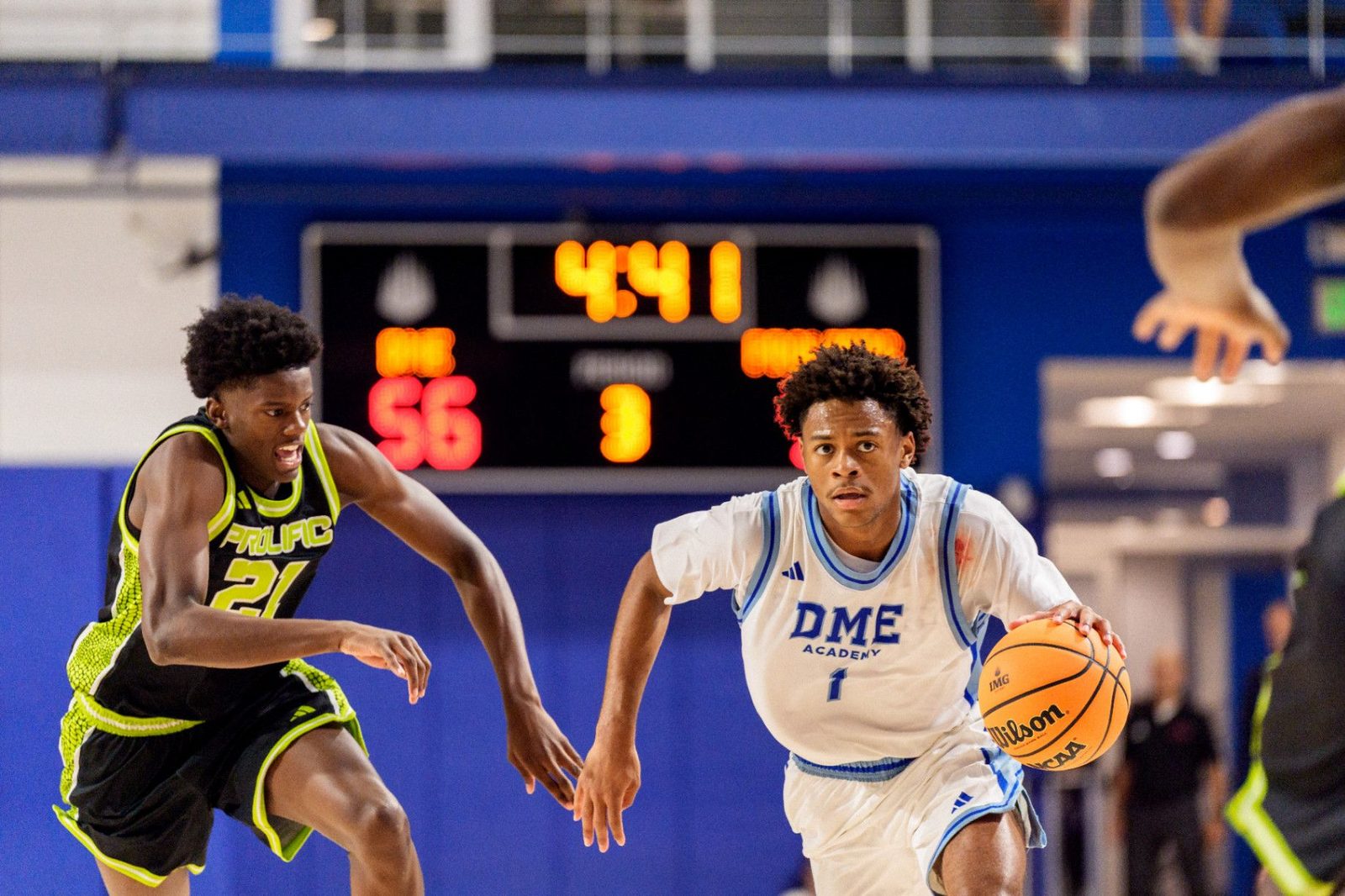
Photo: Jon Shank
If you’re worried that one course choice, a transfer, or a missed step could close off college sports, you’re not alone. The good news: understanding the NCAA eligibility rules early gives you time to ask questions and make a plan.
Quick answer: What are the NCAA eligibility rules?
- For Division I and II you need 16 NCAA-approved core courses, a minimum core-course GPA (2.3 for Division I, 2.2 for Division II), and certification through the NCAA Eligibility Center.
- A fifth category of core courses can include world language, philosophy, and comparative religion.
- Division I also applies the 10/7 rule: 10 core courses, at least 7 in English, math, or science, finished before your seventh semester starts.
- The NCAA builds that GPA from your best core-course grades, not every class on your transcript.
- Division III schools set their own academic admission and eligibility standards.
- Rules can change, so confirm your situation with the NCAA Eligibility Center and your school’s counselor.
What core courses do you need for NCAA eligibility?
Core courses are high school classes in NCAA-recognized academic areas, such as English, math, science, and social science. For Division I and Division II, the NCAA Eligibility Center requires a prescribed set of core courses. The exact subject distribution differs by division, so don’t rely on a general checklist alone.
A course counts only if it is on your high school’s NCAA-approved core-course list and meets NCAA criteria. A class that fulfills your school’s graduation requirements does not automatically count as an NCAA core course. That’s why it’s important to check the list before choosing classes.
The five core-course categories. Division I splits its 16 core courses this way: four years of English or native language, three of math, two of science, one additional English, math, or science, two of social science, and four additional core units. Division II uses a slightly different split: three English or native language, two math, two science, three additional English, math, or science, two social science, and four additional units.
The fifth category is the one families miss. World language, philosophy, and comparative religion courses count toward those four additional units, provided the class is on your school’s approved list. It matters most for international student-athletes, because the NCAA often awards a full core credit for a student’s native language.
How many core courses for NCAA eligibility? Division I and Division II generally require 16 approved core courses, but the required subject mix varies. Division III does not have one NCAA-wide core-course requirement; individual colleges set their own academic standards.
Ask your school counselor to review your planned courses against your school’s NCAA-approved list. If you change schools, take an online class, or enroll in dual-credit coursework, ask whether that specific course will count before you commit.
How does GPA affect NCAA eligibility requirements?
The NCAA Eligibility Center calculates your core-course GPA using approved core courses, not every class on your transcript. A strong overall GPA is valuable, but it does not necessarily tell you whether you meet a division’s NCAA academic standard.
Division I requires a minimum 2.3 core-course GPA. Division II requires a minimum 2.2. Those are the standards the NCAA publishes right now, and the Eligibility Center confirms the number that applies to your enrollment year, so check it there before you build a plan around it.
The good news is how that GPA gets built. The NCAA does not average every class you have ever taken. It takes your best core-course grades, so a D or a failed core class does not have to be the end of the story. Two moves follow from that: recover a weak core grade as fast as you can, and spend your electives in core areas like an extra language or science class instead of electives that never count. We walk through the best-7, best-10, and best-16 mechanics in our companion guide, NCAA Core Courses and the 10/7 Rule: The Checklist That Keeps You Eligible.
Also keep college admission separate from NCAA eligibility. A college can have its own academic requirements, and an athlete may need to meet both the school’s admission standards and the NCAA’s applicable eligibility rules.
What is the NCAA 10/7 rule?
This is the rule that catches families by surprise, especially now that reclassifying is common. For Division I, you must complete 10 of your 16 core courses before your seventh semester begins, which is usually the first semester of 12th grade. At least seven of those 10 must be in English, math, or natural and physical science.
Three details decide whether this goes well:
- The courses lock. Once that seventh semester starts, the core courses you used to meet the 10/7 standard can’t be replaced or retaken for a better grade.
- Reclassing does not reset it. If your athlete reclasses or graduates early, the standard still applies, and moving up a year shrinks the window to finish those 10 courses.
- International-only coursework is exempt. If all of your academic work is from outside the US, the 10/7 rule doesn’t apply to you. The 16 core courses still do.
The practical takeaway is simple: if a grade in English, math, or science slips in ninth, tenth, or eleventh grade, treat recovery as urgent. A D or a failed class eats one of your 10 slots, and you run out of room to fix it. For the full breakdown, including a grade-by-grade checklist, see our companion guide to NCAA core courses and the 10/7 rule.
What does NCAA amateurism and Eligibility Center certification involve?
The NCAA Eligibility Center reviews academic records and amateurism information for athletes pursuing NCAA competition. Amateurism rules concern your participation in sports and certain benefits or agreements you may receive. Some opportunities (such as accepting payment, signing agreements, or competing in a professional environment) can raise questions, but the details matter.
Don’t guess about a specific opportunity. Before accepting money, signing a contract, or taking part in an arrangement that could affect your amateur status, ask the NCAA Eligibility Center or a qualified school counselor to review the situation.
For Division I and II, athletes generally need to register with the Eligibility Center and complete the required certification steps. Division III certification and registration processes differ; check the NCAA’s current guidance for your situation. Registration is not the same as being certified, so follow up on requested documents and outstanding tasks.
How do NCAA Division I, II, and III requirements compare?
This table is a starting point, not a substitute for an individual review. Core-course rules, GPA standards, and certification details are division-specific and can change.
| Requirement | Division I | Division II | Division III |
|---|---|---|---|
| NCAA-approved core courses | 16 | 16 | No NCAA-wide count; each college sets its own standards |
| Minimum core-course GPA | 2.3 | 2.2 | Set by each college |
| 10/7 rule | Yes: 10 core courses (7 in English, math or science) before the seventh semester | No | No |
| Additional core units (can include world language, philosophy, comparative religion) | 4 | 4 | n/a |
| Eligibility Center registration and certification | Required | Required | Process differs; check current NCAA guidance |
For the latest details, check the NCAA’s Division I initial-eligibility requirements, Division II initial-eligibility requirements, and Division III initial-eligibility requirements. If you’re unsure how the rules apply to your athlete, confirm with the Eligibility Center or the school’s NCAA eligibility counselor.
The timeline nobody tells you about
Eligibility planning works best when it starts before recruiting gets busy. Use this checklist as a guide, then ask your counselor to tailor it to your courses and target divisions.
- Eighth grade: Talk about college-athletics goals and the importance of a thoughtful high school course plan. Keep records of any high school-level coursework completed early, and ask whether it may count toward NCAA requirements.
- Ninth grade: Start checking that your courses appear on your school’s NCAA-approved list. Build steady study habits: your core-course grades can matter later.
- Tenth grade: Review your transcript with a counselor. If you transfer, change course levels, take online or dual-enrollment classes, or notice a mistake, ask how it affects your NCAA-approved coursework and records.
- Eleventh grade: Recheck your core-course progress and division plans. Register with the NCAA Eligibility Center when appropriate for your recruiting and certification path, and complete the account steps it provides. Your 10 core courses lock when senior year starts, so recover any D or failing grade in English, math, or science now rather than later.
- Twelfth grade: Keep your grades up and confirm that planned courses will satisfy remaining requirements. Ask your high school to send the required transcript records. Follow the Eligibility Center’s instructions for final academic documents and request final amateurism certification when prompted for your pathway.
- After graduation: Confirm that final transcripts, proof of graduation, and any other requested records have reached the right place. Check that your certification is complete before moving forward with college participation.
The 6 mistakes that cost athletes eligibility
- Taking a course that isn’t NCAA-approved: Check the approved list before enrolling, not after you finish the class.
- Letting a core-course grade slip: A D or a failed class in a core area is expensive, because it can hold a slot in your best-16 math and in the 10/7 count. Ask for support early, and recover the grade the same year if you can.
- Filling electives with classes that don’t count: Swap them for core-area electives like an extra language or science class, so every credit is doing work for you.
- Transferring without updating your records: Make sure your new school has your academic history and ask how the change affects your NCAA course review.
- Waiting until senior year to register or check progress: Late discovery of a missing course can limit your options. Start early and review your status regularly.
- Accepting a paid or professional opportunity without asking: Amateurism questions depend on the details. Get guidance before you accept money, sign an agreement, or participate.
NCAA eligibility FAQ
What are the NCAA eligibility requirements for student-athletes?
For Division I and II, the NCAA Eligibility Center reviews approved core courses, core-course GPA, and amateurism as part of the applicable certification process. Division III schools set their own academic standards. Check current NCAA guidance for your division and situation.
Do NCAA eligibility rules use my overall GPA?
The NCAA Eligibility Center evaluates GPA in approved core courses for applicable Division I and II academic requirements. It uses your best core-course grades, not every class on your transcript. Your overall GPA may still matter for college admission, so review both with your counselor.
Does a D or a failed class ruin my eligibility?
Not automatically, but it costs you room to work with. A D or an F in a core course can occupy a slot in your best-grade calculation and in your 10/7 count, and the grades used for 10/7 lock once your seventh semester begins. Recover the grade as soon as your school allows, and keep a core-area elective or two in reserve.
Do I need SAT or ACT scores for NCAA eligibility?
SAT and ACT scores are not currently an NCAA initial-eligibility requirement for Division I and II. A college may still require scores for its own admission or other decisions. Confirm current rules with the Eligibility Center and each college.
What is the NCAA 10/7 rule?
Ten of your 16 core courses must be finished before your seventh semester begins, with at least seven of them in English, math, or natural and physical science. It applies to Division I and to anyone who has completed domestic coursework since ninth grade, and those courses lock once that semester starts. Students with only international coursework are exempt from it.
Does a world language class count as an NCAA core course?
Often, yes. World language, philosophy, and comparative religion can fill the four additional core-course units, as long as the class appears on your high school’s NCAA-approved list. For international students, native-language coursework is frequently awarded as a full core credit, so ask before assuming it won’t count.
When should I register with the NCAA Eligibility Center?
Start learning about registration early, and complete it in line with your recruiting and certification plans. Don’t wait until senior year to check course progress. The NCAA Eligibility Center can provide the right account and steps for your circumstances.
Can a post-grad year affect NCAA eligibility?
It may affect your academic timeline or eligibility circumstances, depending on your history and plans. Before enrolling, competing, or accepting an opportunity, ask the NCAA Eligibility Center and the school’s eligibility counselor to review your individual case.
Plan your next step with DME Academy
You don’t have to navigate eligibility alone. DME Academy’s college-preparation program includes a designated college counseling and NCAA eligibility role on staff, and the academy reports a 95% college placement rate. That support can help you connect academic planning with your goals as an athlete.
Explore DME’s college preparation resources, learn about the Post Grad Black program, or review the admissions process. Start the conversation early, bring your questions, and build a plan that supports both your education and your next opportunity in sport.
Ready to go deeper on course planning? Read NCAA Core Courses and the 10/7 Rule: The Checklist That Keeps You Eligible.
Where to verify: For current NCAA eligibility rules, account steps, and division-specific requirements, visit the NCAA Eligibility Center and confirm your course plan with your school’s NCAA eligibility counselor.